Today I went with Ed to buy fruit from the guys out on Mohammed Najeeb (the busy street a block from our house). The construction workers creating an apartment building across the street were singing and banging something (their hammers?) in rhythm. They've been working on that building for the entire time we've been here, but it looks exactly the same. Maybe they've been building interior walls. I sure don't know.
The fruit guys were happy to see us. They hadn't opened up their stands until 10 or 11 or so. Early in the day during Ramadan is a slow time. They all know us by sight, which may or may not be a good thing. At first I was sure they were way overcharging us, but the prices have been kind of consistent. So either they're giving us a fair price, or they're good at remembering the exorbitant amounts khawajaat will pay for 2 kilos of bananas.
We got a watermelon (the guy slapped it so I could hear and said, "Quoyiss?" which means, "Good?"... I had no clue so I just nodded contentedly), and 4 mangoes (mangos?), and some bananas. The bananas are short and soft and powdery in your mouth. They weighed out the bananas on their ancient little scales, with a 2-kilo weight in one side and the bananas in the other. They keep adding bananas until the banana side touches down, and then they bag 'em up for you.
I made Ed carry the watermelon for me. It was a monster.
Today the street kids were pestering us more than usual, since we were the only people out. A vendor aimed a kick at them so that they wouldn't interfere with the sale. But they got to us while we were walking back. I understood what they were saying this time: "Give us money, give us money, we need to eat." So I gave them each a banana. And walked away fast.
Right before we turned into our front yard (which has high walls around it, like every other house in the neighborhood), I saw a man with a hose watering some trees. He was joking around with the security guard of the building, who had rolled up his pant legs, and the hose guy aimed the water so high that it made rainbows before falling down.
Saturday, September 30, 2006

Friday, September 29, 2006
Watermaid

One economical way to buy drinking water here is in large five liter containers, but they are very difficult to pour from. We ended up spilling lots on the ground. I finally found a funnel at the open market. It’s made of tin and we bought it from the tinsmith who fashioned it, a blind man who asked the next vendor over how much change he should give us when we handed him a bill in payment. I always think of the Tin Man when I use it. And in this photo Ruth looks like Vermeer’s milkmaid.
Thursday, September 28, 2006
I can read!
Today I read two of the four words on a billboard. They said, "Now, your car."
I memorized the other two words and asked my Arabic teacher at school about them. She told me they meant "Deserves the advantage." Then she said she thought I could read the newspaper. Um, no.
But that little display of Arabic prowess earned me forgiveness for forgetting one (!) verb: یڄری to run.
I memorized the other two words and asked my Arabic teacher at school about them. She told me they meant "Deserves the advantage." Then she said she thought I could read the newspaper. Um, no.
But that little display of Arabic prowess earned me forgiveness for forgetting one (!) verb: یڄری to run.
Tuesday, September 26, 2006
The Ants Come Marching In
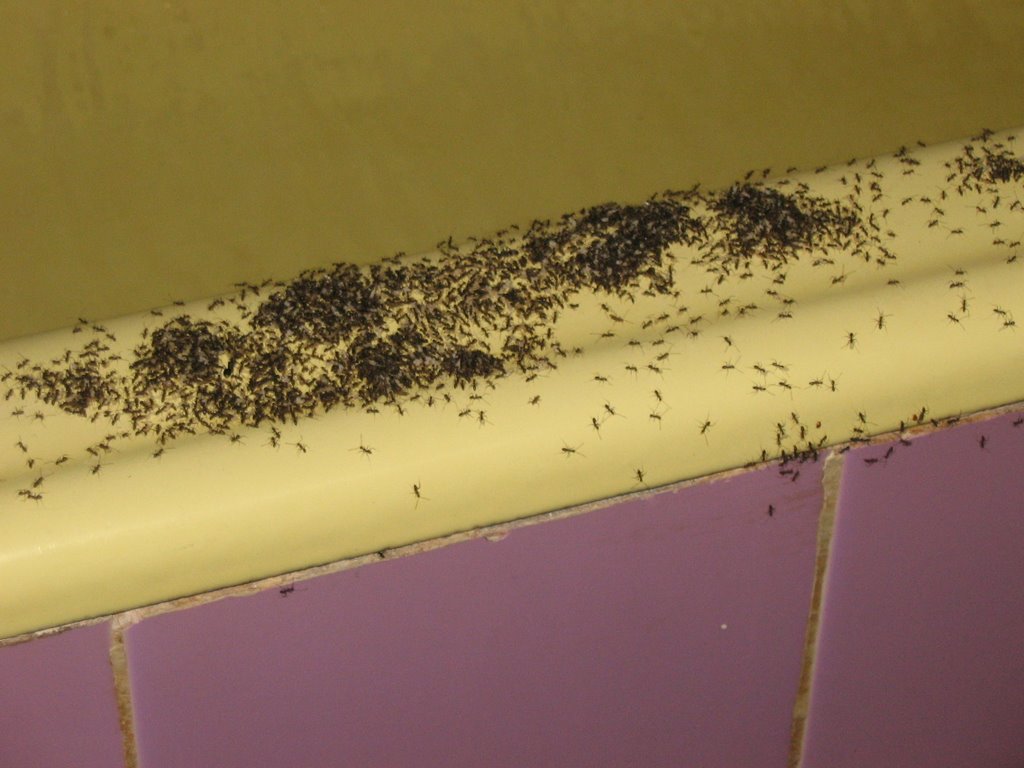
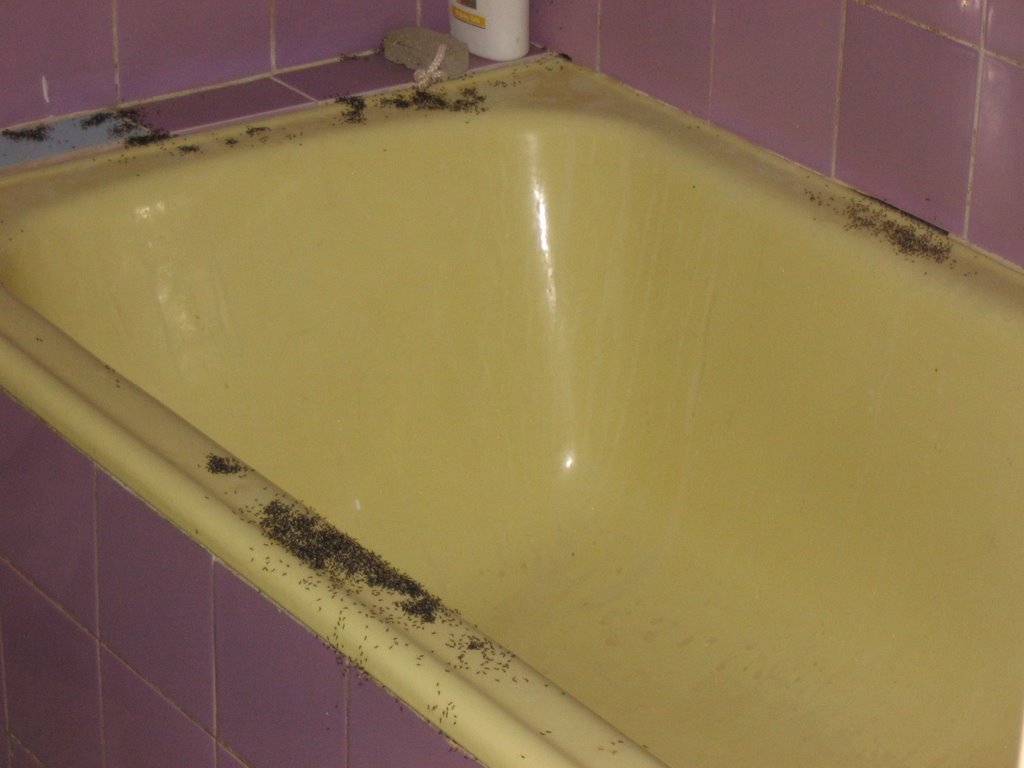
We have ants. Despite living on the second floor, we seem to regularly have ants crawling around. Usually there are just a few and we can peacefully co-exist, but occasionally we will suddenly have a full-scale ant incursion on our hands, often for new perceptible reason. We’ve been told that they live inside the concrete in old buildings and there’s nothing you can do to completely get rid of them. I’ve noticed that all the grocery stores have insect poison for sale. Our worst incursion to date was in one of our bathrooms, where ants suddenly started boiling out of the walls. Luckily, Ed finds the ants interesting, so he dealt with them for us. Besides the ants, these photographs show off the lovely colors in our bathroom.
Ramadan and Jinn
I like Ramadan at our school. Half or more of the people who work/study there are Muslim, so the atmosphere is really different this month. Quieter. People are being more considerate of each other. A whole bunch of non-Muslims have decided to fast, too, just to try it out. Not me, though. I just try to look like I'm not enjoying my lunch very much.
Today Aleena, who is a Pakistani girl in my grade, was telling me all the stories she's heard about jinn, which are ghosts or powerful spirits of some kind, and probably the source of the word genie. Aleena believes firmly in jinn. She lived in a house in Islamabad that was built over a graveyard. When her family moved in, the place had been vacant for two years, in which time a jinn had moved into the second story. The jinn never hurt her or her brother, but it was known to bother guests in the second-floor guest bedroom, and once or twice it pushed her mother down the stairs. And one time, they found that their deaf-mute housekeeper had abandoned her ironing to gesticulate wildly at empty air.
Aleena also told me how jinn are attracted to beautiful things. She has an aunt who was very beautiful as a girl, and who caught the attention of a jinn that served her father. (Here a short aside explaining that there are ways to make yourself master of a jinn, but Aleena would rather not talk about them.) If a jinn likes you, it will help you; for example, it may steal money to give you. This jinn took care of Aleena's aunt until she got married. Then the aunt started to show up with mysterious cuts and scratches (The Sixth Sense, anyone?), which the jinn had made her inflict on herself. Now she's not beautiful any more, some of her teeth are broken, and she's a "psychic" (I think Aleena meant she's gone kind of crazy). This is true, I was told. You have to be careful about jinn.
Today Aleena, who is a Pakistani girl in my grade, was telling me all the stories she's heard about jinn, which are ghosts or powerful spirits of some kind, and probably the source of the word genie. Aleena believes firmly in jinn. She lived in a house in Islamabad that was built over a graveyard. When her family moved in, the place had been vacant for two years, in which time a jinn had moved into the second story. The jinn never hurt her or her brother, but it was known to bother guests in the second-floor guest bedroom, and once or twice it pushed her mother down the stairs. And one time, they found that their deaf-mute housekeeper had abandoned her ironing to gesticulate wildly at empty air.
Aleena also told me how jinn are attracted to beautiful things. She has an aunt who was very beautiful as a girl, and who caught the attention of a jinn that served her father. (Here a short aside explaining that there are ways to make yourself master of a jinn, but Aleena would rather not talk about them.) If a jinn likes you, it will help you; for example, it may steal money to give you. This jinn took care of Aleena's aunt until she got married. Then the aunt started to show up with mysterious cuts and scratches (The Sixth Sense, anyone?), which the jinn had made her inflict on herself. Now she's not beautiful any more, some of her teeth are broken, and she's a "psychic" (I think Aleena meant she's gone kind of crazy). This is true, I was told. You have to be careful about jinn.
Monday, September 25, 2006
Ramadan Mubarak
Ramadan started on Saturday. David was home for the weekend, and we had planned to go to a restaurant to belatedly celebrate his birthday, but the restaurant he picked out was closed, apparently for all of Ramadan. The South African chain next door to it, Steers, had just opened for business at 6:00 PM, but they didn’t have anything cooked yet. We eventually went to a Chinese restaurant that caters to expats that was open and operating.
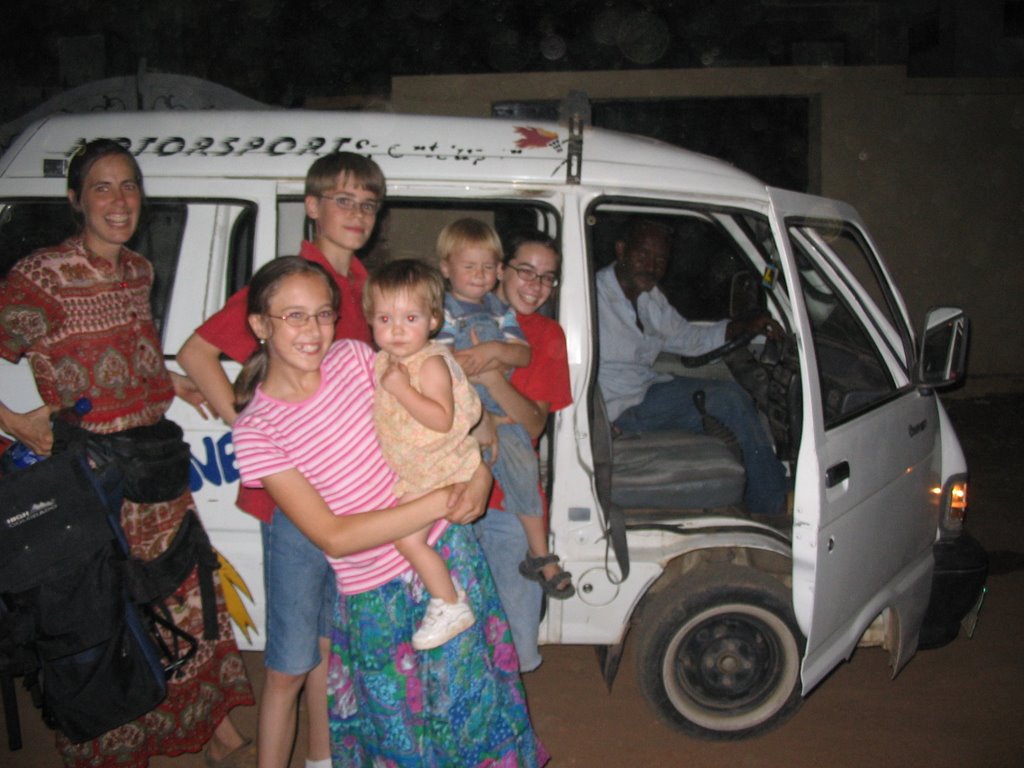
On the way home, I impulsively said, “Ramadan Mubarak,” to our amjad driver. Turns out that’s not what people say here (kind of like saying “Happy Christmas” in the US; everyone knows what you mean, but nobody says it), but he was nonetheless tickled and was very sweet to us the whole ride home, even when the hilarity in the back seat started to get out of control. He let us take his picture when we got out.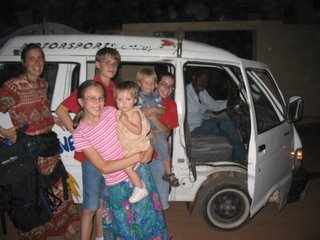
During the day, all the restaurants are closed and nobody sells street food. In fact, nobody eats or drinks in public, even if they’re not Muslim (maybe it’s even illegal?). I had thought that maybe the restaurants would be packed after sundown, but last night David and I dropped by the popular restaurant near our house, Lazeez, and I was surprised to see that it was almost empty. I guess Ramadan is kind of like Thanksgiving, that it’s a time you eat at home.
We happened to drive by a mosque last night at prayer time. There were so many people there praying that they were spilling out into the street.
Many of the kids’ classmates and teachers are fasting. Even some non-Muslims are fasting, partly out of curiosity about what it’s like and partly as a show of support for their Muslim friends. Ruth took lunch yesterday but felt awkward trying to find a spot to eat where she wouldn’t be eating in front of someone who was fasting, so she just ate when she got home from school.
On the way home, I impulsively said, “Ramadan Mubarak,” to our amjad driver. Turns out that’s not what people say here (kind of like saying “Happy Christmas” in the US; everyone knows what you mean, but nobody says it), but he was nonetheless tickled and was very sweet to us the whole ride home, even when the hilarity in the back seat started to get out of control. He let us take his picture when we got out.
During the day, all the restaurants are closed and nobody sells street food. In fact, nobody eats or drinks in public, even if they’re not Muslim (maybe it’s even illegal?). I had thought that maybe the restaurants would be packed after sundown, but last night David and I dropped by the popular restaurant near our house, Lazeez, and I was surprised to see that it was almost empty. I guess Ramadan is kind of like Thanksgiving, that it’s a time you eat at home.
We happened to drive by a mosque last night at prayer time. There were so many people there praying that they were spilling out into the street.
Many of the kids’ classmates and teachers are fasting. Even some non-Muslims are fasting, partly out of curiosity about what it’s like and partly as a show of support for their Muslim friends. Ruth took lunch yesterday but felt awkward trying to find a spot to eat where she wouldn’t be eating in front of someone who was fasting, so she just ate when she got home from school.
Sunday, September 24, 2006
The Bus Again
All my cool Sudanese experiences are on the bus. That's what I get for going to an American school.
See, every time somebody gets off the bus, you have to move back and fill up their seat. One morning going to school, I had to get up and let people off, and then move back, about 5 times. For our bus ride, that means every other minute.
Finally, I ended up on the very back row, next to a local girl about my age, dressed in her school uniform (powder-blue fatigues and a white shawl over her hair). It's kind of unusual to see girls traveling by themselves on the bus.
She turned to me and said, in accentless English, "What's your name?" Which pretty much blew me away. I mean, people are always saying things like that to us, but just to practice. Not actually trying to start a conversation. And not sounding so fluent.
So we had this whole little conversation, riding the bus together to school. Her dad was at university in England or Scotland for several years, and so her whole family lived there while he studied. Now they're back in Khartoum.
When I got off, she said, "Okay, have a nice day!"
See, every time somebody gets off the bus, you have to move back and fill up their seat. One morning going to school, I had to get up and let people off, and then move back, about 5 times. For our bus ride, that means every other minute.
Finally, I ended up on the very back row, next to a local girl about my age, dressed in her school uniform (powder-blue fatigues and a white shawl over her hair). It's kind of unusual to see girls traveling by themselves on the bus.
She turned to me and said, in accentless English, "What's your name?" Which pretty much blew me away. I mean, people are always saying things like that to us, but just to practice. Not actually trying to start a conversation. And not sounding so fluent.
So we had this whole little conversation, riding the bus together to school. Her dad was at university in England or Scotland for several years, and so her whole family lived there while he studied. Now they're back in Khartoum.
When I got off, she said, "Okay, have a nice day!"
Thursday, September 21, 2006
Gimme some skin
You have to understand that we never do anything in pre-calculus. Actually, I don't even take pre-calculus, but the rest of my grade does, so I always go in, too, to hang out with my friends. So yesterday in pre-calculus, as my teacher was padding around in his socks, and half the class was slouching around campus in search of information on trigonometric functions, a senior named Muzamil wandered into the classroom.
I think Muzamil is Sudanese. At any rate, he speaks Sudanese Arabic fluently. So does Tariq, a guy in my grade that I know is Sudanese. The difference is that Tariq's skin is darker than Muzamil's, and Tariq has lived a lot of his life in Canada, whereas Muzamil has practically never left Sudan. Somehow, Muzamil and Tariq got into a big argument about whether the two of them were black or white. Surprisingly, this is a common point of discussion at my school.
Muzamil claimed they were both white, but Tariq thinks of himself as black. Both have skin darker than mine. They discussed whether or not Arab was a separate group, whether black necessarily meant of African descent, and so on. Muzamil said that he thought you were white unless your skin was so dark that it could be called black pretty literally. There are a lot of Southern Sudanese people in Khartoum for whom this is true. He said that if Tariq wasn't white, he was at the very most tan. Tariq said that if Muzamil had ever done any travelling, he would know that black people can be a whole variety of shades, and that to be white you have to have really pale skin.
It was an interesting conversation to listen to. My skin was pointed out several times, as was that of Hana (from Malaysia). It made me think about what we're doing in history class, how the Darfur conflict was transformed into something racial when it had started out over land. And also what we're doing in English (African Lit), with both foreign and native perspectives on Africa, and "savages". And even what we're doing in art, which is value studies. Muzamil is in my art class. He and I both have black and white photographs of ourselves that we are using to paint huge self-portraits, all in one color. Mine is green, his is orange. The challenge is to take the different values of gray from the photograph and translate them into different tints and shades of our chosen color. In the end, I think, our skin will look about the same.
I think Muzamil is Sudanese. At any rate, he speaks Sudanese Arabic fluently. So does Tariq, a guy in my grade that I know is Sudanese. The difference is that Tariq's skin is darker than Muzamil's, and Tariq has lived a lot of his life in Canada, whereas Muzamil has practically never left Sudan. Somehow, Muzamil and Tariq got into a big argument about whether the two of them were black or white. Surprisingly, this is a common point of discussion at my school.
Muzamil claimed they were both white, but Tariq thinks of himself as black. Both have skin darker than mine. They discussed whether or not Arab was a separate group, whether black necessarily meant of African descent, and so on. Muzamil said that he thought you were white unless your skin was so dark that it could be called black pretty literally. There are a lot of Southern Sudanese people in Khartoum for whom this is true. He said that if Tariq wasn't white, he was at the very most tan. Tariq said that if Muzamil had ever done any travelling, he would know that black people can be a whole variety of shades, and that to be white you have to have really pale skin.
It was an interesting conversation to listen to. My skin was pointed out several times, as was that of Hana (from Malaysia). It made me think about what we're doing in history class, how the Darfur conflict was transformed into something racial when it had started out over land. And also what we're doing in English (African Lit), with both foreign and native perspectives on Africa, and "savages". And even what we're doing in art, which is value studies. Muzamil is in my art class. He and I both have black and white photographs of ourselves that we are using to paint huge self-portraits, all in one color. Mine is green, his is orange. The challenge is to take the different values of gray from the photograph and translate them into different tints and shades of our chosen color. In the end, I think, our skin will look about the same.
Tuesday, September 19, 2006
Alif Bah Humbug
Before we got here, I had grandiose visions of learning Arabic: soon I would be communing with passersby, inviting casual acquaintances over for dinner, immersing myself in the culture through my mastery of Arabic. My goals have diminished remarkably. My new goal is to master the alphabet by the end of the year. People avoid sitting by me on the bus as I spend the time, forehead furrowed, eyes squinting, peering out the window muttering to myself as I try to sound out the signs whizzing past us. I’ve only mastered about ten letters, so it’s a spotty affair. I hope that by the end of the year I’ll be able to look at a word and tell you what it says, even if I still have no idea what it means.
Ruth has the alphabet down pat and can even eavesdrop on Arabic conversations and get the gist of some of them. Her Arabic teacher laughingly called her “greedy” for asking for so many vocabulary words. I was drilling her on them tonight. She’s not having to learn all the vocabulary for smoking and drinking alcohol as our introductory books in Romanian and Serbo-Croatian required, but it seems like an odd set of words. Here’s a sampling: thigh, plow, suitable, button, banana, elephant.
In Arabic, banana is a mass noun—you can’t count bananas, just as in English you can’t count water.
Ruth has the alphabet down pat and can even eavesdrop on Arabic conversations and get the gist of some of them. Her Arabic teacher laughingly called her “greedy” for asking for so many vocabulary words. I was drilling her on them tonight. She’s not having to learn all the vocabulary for smoking and drinking alcohol as our introductory books in Romanian and Serbo-Croatian required, but it seems like an odd set of words. Here’s a sampling: thigh, plow, suitable, button, banana, elephant.
In Arabic, banana is a mass noun—you can’t count bananas, just as in English you can’t count water.
Paying bills
Our phone service got cut off again. This time, I insisted that the realtor take me with her and show me how we’re supposed to pay. She drove me to a small, dusty office. Two men sat on folding chairs behind a counter. There was an old computer, one of those enormous behemoths from the early days of personal computing, which one of the men consulted when I gave him our telephone number. Nobody apparently gets a bill. You’re just supposed to show up at the office by the fifteenth of each month to pay. If you want the bill, you have to go to another office, somewhere else in town. I don’t know how to do that, so we’ll just pay whatever they tell us to.
My mom reminded me that I still don’t know how to pay for water. One more utility to go…
My mom reminded me that I still don’t know how to pay for water. One more utility to go…
Friday, September 15, 2006
Pay attention, class. This is how not to run a museum.
On Thursday, 9th grade and 11th grade of Khartoum American School went on a field trip. That’s my grade and Edward’s grade. We’re both studying the ancient Nubian civilization of Kush, which was in what is now Sudan, and so our history and English teachers thought it would be cool to take us to the Sudanese National Museum, which is about a half-hour bus ride from the school.
They sent home a letter warning our parents to speak now if they didn’t want their kid taken outside the foot-thick walls surrounding the school compound, but there was no permission slip. Apparently that’s unnecessary.
Then they loaded all 21 of us into a rented bus with fringed windows and light fixtures, and off we went.
We attracted a lot of attention, which I thought was quite interesting, since our bus was as shabby as anything else on the road. Sometimes when we were stopped at traffic lights, Sudanese men in other vehicles would lean out their windows to test out their English on us. “Hello, how are you?” “I love you.” Stuff like that.
The museum, in some ways, was a bit of a disappointment. The main building has a collection of pottery, statuettes, spearheads, and other stuff from tombs. But it’s all in one hall, and in 15 or 20 minutes you can see everything. Someone who’d been there before told me that they used to have a nice display of gold jewelry (Nubians were famous for it – nub meant gold in some ancient language), but that the entire thing had been stolen a few years ago.
In other ways, though, the museum is absolutely amazing. Five or six stone temples have been moved, block by block, from holy land Jebl Barka, way out in the desert, to the museum grounds. The museum has built glass and steel shelters around them, to protect them from the elements, and you can go in and walk through the temple itself. It’s incredible. My favorite temple was one built by Hatshepsut, the female pharaoh who kept the throne when she was supposed to give it to her nephew. It was especially neat because I’d read about when she died, and how the jealous nephew went on a rampage and chipped off or covered up her name on all her monuments. This was one of those monuments! We saw his cartouche stamped into a wall, and found a color portrait of Hatshepsut in her ceremonial beard – since it had been covered up, the paint was miraculously preserved. That nephew who had meant to erase her from history achieved just the opposite.
There is almost no surface left blank – pictorial writing and elaborate portraits and stuff everywhere. In a few places, there’s still paint on the stones. I loved finding owls, elephants, geese, ankhs with arms, and two people holding hands, besides a prince with a slingshot. There’s also graffiti in Greek, and graffiti dated 200 years ago carved into the walls. Unfortunately, since there’s nothing to stop you from touching the carvings, it’s easy to find fresh graffiti carved and written across depictions of funerary boats. And there’s some kind of black fungus or rot growing in most of the temples. It’s obscuring and probably destroying huge swaths of writing. We saw no evidence of attempts to save the stone.
Likewise, stones that were found alone in the sand are set up in front of the museum with only a little canopy to protect them. My history teacher pointed out the oldest known example of Meroitic writing, a script unique to the Nubians, and said something to the effect that we should take a good look at it while we still could. Soon the dusty winds off the Sahara will grind it smooth.
They sent home a letter warning our parents to speak now if they didn’t want their kid taken outside the foot-thick walls surrounding the school compound, but there was no permission slip. Apparently that’s unnecessary.
Then they loaded all 21 of us into a rented bus with fringed windows and light fixtures, and off we went.
We attracted a lot of attention, which I thought was quite interesting, since our bus was as shabby as anything else on the road. Sometimes when we were stopped at traffic lights, Sudanese men in other vehicles would lean out their windows to test out their English on us. “Hello, how are you?” “I love you.” Stuff like that.
The museum, in some ways, was a bit of a disappointment. The main building has a collection of pottery, statuettes, spearheads, and other stuff from tombs. But it’s all in one hall, and in 15 or 20 minutes you can see everything. Someone who’d been there before told me that they used to have a nice display of gold jewelry (Nubians were famous for it – nub meant gold in some ancient language), but that the entire thing had been stolen a few years ago.
In other ways, though, the museum is absolutely amazing. Five or six stone temples have been moved, block by block, from holy land Jebl Barka, way out in the desert, to the museum grounds. The museum has built glass and steel shelters around them, to protect them from the elements, and you can go in and walk through the temple itself. It’s incredible. My favorite temple was one built by Hatshepsut, the female pharaoh who kept the throne when she was supposed to give it to her nephew. It was especially neat because I’d read about when she died, and how the jealous nephew went on a rampage and chipped off or covered up her name on all her monuments. This was one of those monuments! We saw his cartouche stamped into a wall, and found a color portrait of Hatshepsut in her ceremonial beard – since it had been covered up, the paint was miraculously preserved. That nephew who had meant to erase her from history achieved just the opposite.
There is almost no surface left blank – pictorial writing and elaborate portraits and stuff everywhere. In a few places, there’s still paint on the stones. I loved finding owls, elephants, geese, ankhs with arms, and two people holding hands, besides a prince with a slingshot. There’s also graffiti in Greek, and graffiti dated 200 years ago carved into the walls. Unfortunately, since there’s nothing to stop you from touching the carvings, it’s easy to find fresh graffiti carved and written across depictions of funerary boats. And there’s some kind of black fungus or rot growing in most of the temples. It’s obscuring and probably destroying huge swaths of writing. We saw no evidence of attempts to save the stone.
Likewise, stones that were found alone in the sand are set up in front of the museum with only a little canopy to protect them. My history teacher pointed out the oldest known example of Meroitic writing, a script unique to the Nubians, and said something to the effect that we should take a good look at it while we still could. Soon the dusty winds off the Sahara will grind it smooth.
Wednesday, September 13, 2006
John Garang
 About a month ago, it was the anniversary of the death of John Garang in an airplane accident. He is, largely, the reason our family is here in Sudan. His charisma and vision were key elements in forging the peace in southern Sudan. People were afraid the peace would fall apart with his death, but it is a tribute to him that it has endured.
On the anniversary of his death, there were candlelight vigils and banners and posters up everywhere, even here in Khartoum. David has watched some of the banners getting progressively more and more tattered in the month since then, so he and Ed finally went out together and liberated the last unshredded banner.
Saturday, September 09, 2006
The Bedouin Corner
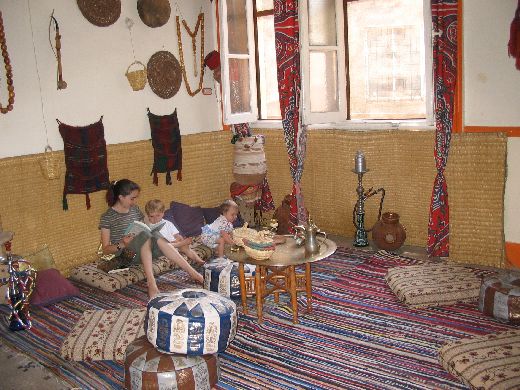
This picture isn't really from Sudan: it's the lobby of our hotel in Cairo. But it's got a bunch of stuff in it that you see in Sudan, too. The curtains are this tent material that is used for outdoor parties and for fencing off construction sites. Right under the window is a hookah, which Sudanese men smoke, reminding us all forcibly of Alice in Wonderland. Some of my classmates from the American school go out together to smoke them, too, which I think is illegal, at least for the girls.
Riding the Bus
Sometimes interesting things happen when Ed, Lucy, and I are riding home from school on the bus. Once an old guy got on and sat down in an empty seat next to Lucy and laid a sword down across everybody's feet. It was a long, silver sword, in a scabbard that had pagodas and dragons and all kinds of things like that carved on it. The Sudanese schoolboy sitting next to me got really excited and asked the guy all kinds of questions about it, but I couldn't figure out what he was saying. Lucy and I just kind of stared at it (Ed was in the back of the bus, so he missed out entirely).
Another time Ed sat next to a woman who was holding her little boy on her lap. Ed made silly faces at the boy to amuse him, until he suddenly realized he was scaring the kid to death.
You have to know how the buses work: you stand on the side of the road and stick out your arm when you see a bus coming. If they have space for you, they stop. You climb on and sit down, and once the bus is speeding merrily on its way, the guy who stands at the door comes around tapping two coins together, your signal to pay up. Everybody pays the same amount, 30 dinar, which is tiny, maybe 15 American cents. Then you sit back and relax until you see the place you want to get off, at which point you snap your fingers loudly at the man by the door. He makes a "sst-ssst" noise at the driver, who pulls over at the side of the road to let you hop off.
So we'd been riding the bus for a week or so, when doormen started asking us for more money. We usually give a 100-dinar note, and expect 10 dinar back in change. But now when we gave the guy the bill, he'd say, "Give me two," in Arabic. We thought we were being charged a "khawaja tax" (the African tendency to double the price at the sight of foreigners), and refused. Later, though, we asked around at school, and it turns out that the price has gone up. Instead of 30 dinar per person, now it's 40. And the doormen weren't asking for 2 bills, they were asking for 20 dinar more. I feel clueless, that the only way we have to find out whether or not the price has risen is to ask the other expats we know.
One time, when the bus was stopped at an intersection, I was looking out my window when a 6 or 7 year old boy in another vehicle stuck his head out his window, caught my eye, and made a "you're not the boss of me" face. Zing.
Another time Ed sat next to a woman who was holding her little boy on her lap. Ed made silly faces at the boy to amuse him, until he suddenly realized he was scaring the kid to death.
You have to know how the buses work: you stand on the side of the road and stick out your arm when you see a bus coming. If they have space for you, they stop. You climb on and sit down, and once the bus is speeding merrily on its way, the guy who stands at the door comes around tapping two coins together, your signal to pay up. Everybody pays the same amount, 30 dinar, which is tiny, maybe 15 American cents. Then you sit back and relax until you see the place you want to get off, at which point you snap your fingers loudly at the man by the door. He makes a "sst-ssst" noise at the driver, who pulls over at the side of the road to let you hop off.
So we'd been riding the bus for a week or so, when doormen started asking us for more money. We usually give a 100-dinar note, and expect 10 dinar back in change. But now when we gave the guy the bill, he'd say, "Give me two," in Arabic. We thought we were being charged a "khawaja tax" (the African tendency to double the price at the sight of foreigners), and refused. Later, though, we asked around at school, and it turns out that the price has gone up. Instead of 30 dinar per person, now it's 40. And the doormen weren't asking for 2 bills, they were asking for 20 dinar more. I feel clueless, that the only way we have to find out whether or not the price has risen is to ask the other expats we know.
One time, when the bus was stopped at an intersection, I was looking out my window when a 6 or 7 year old boy in another vehicle stuck his head out his window, caught my eye, and made a "you're not the boss of me" face. Zing.
Friday, September 08, 2006
Sudanese treats
There are lots of date palm trees. Recently, we’ve noticed lots of burlap bags tied in the trees. They’re placed there to protect the ripening dates from hungry birds. The dates themselves have for some time been being sold at the side of the road, piled up in great brown, dry heaps. We finally were brave enough to buy some. They’re a strange texture—almost leathery—but tasty. Lucy loves them (and regularly alarms Ed by asking if he wants a date—“No! I’m not sixteen yet!”).
We also bought dried hibiscus flowers to make karkadeh, a popular Sudanese punch that Isaac and Nora and I have met at play group. You steep the dried flowers in water, then chill the water and add sugar (lots if you’re Sudanese, not quite so much if you’re not). It’s delicious, a little bit tangy, and beautiful, a deep red color.
We also bought dried hibiscus flowers to make karkadeh, a popular Sudanese punch that Isaac and Nora and I have met at play group. You steep the dried flowers in water, then chill the water and add sugar (lots if you’re Sudanese, not quite so much if you’re not). It’s delicious, a little bit tangy, and beautiful, a deep red color.
Getting what you need

Every week they bring some new orphans to hippotherapy, but there are a few regulars who come back every week. It’s interesting to see the different ways they get what they need. Haifa is unceasingly patient. She can’t walk or crawl and she can’t talk. She lies where she is placed perfectly calmly until someone catches her eye. Then she unfailingly gives that person a radiant smile, instantly rewarding their attention.
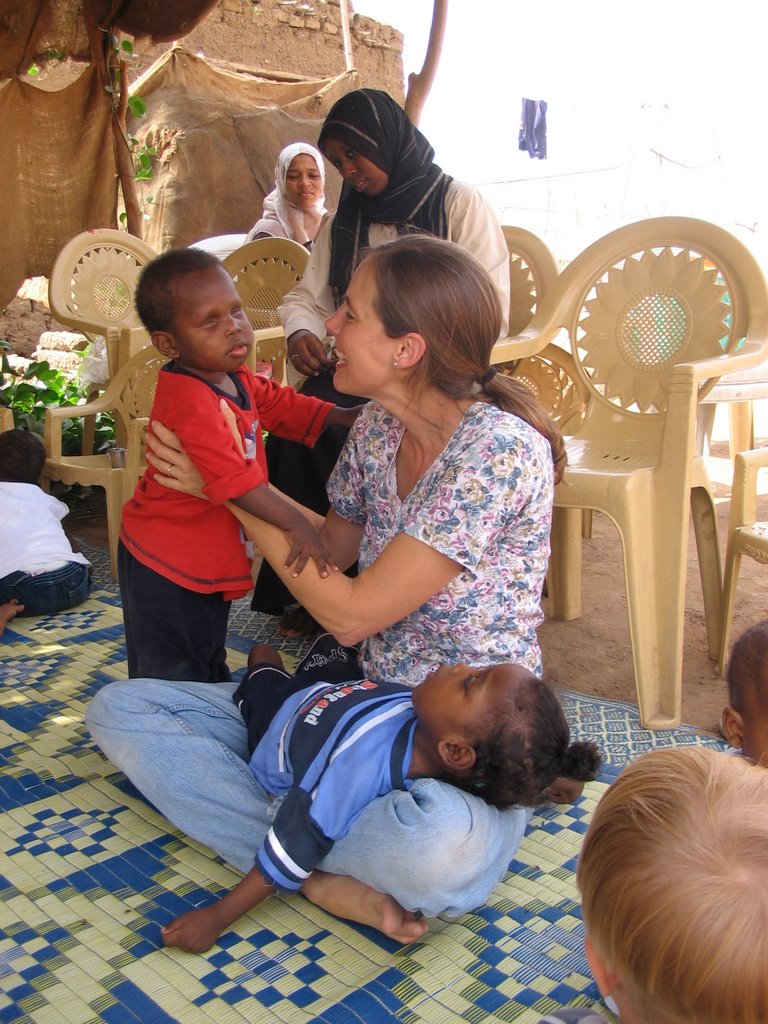 Abdu Simi, by contrast, is a live wire. He is blind, but he can walk, and he does, lurching from one handhold to the other until he grabs an adult. Then he holds on and demands attention, by mimicking whatever they’re saying (“Hello! How are you!” is what he chants endlessly at me; he uses Arabic on the Arabic speakers; I imagine he’d use Japanese if any Japanese volunteers showed up), or by throwing chairs, or by hitting them if he’s run out of other ideas.
 Different strategies, same outcome.
Tuesday, September 05, 2006
Flooding
It has been raining hard in Ethiopia and southern Sudan, so the Nile is flooding here in Khartoum. Here are some photos of the flooding.


Monday, September 04, 2006
Strolling along the Nile
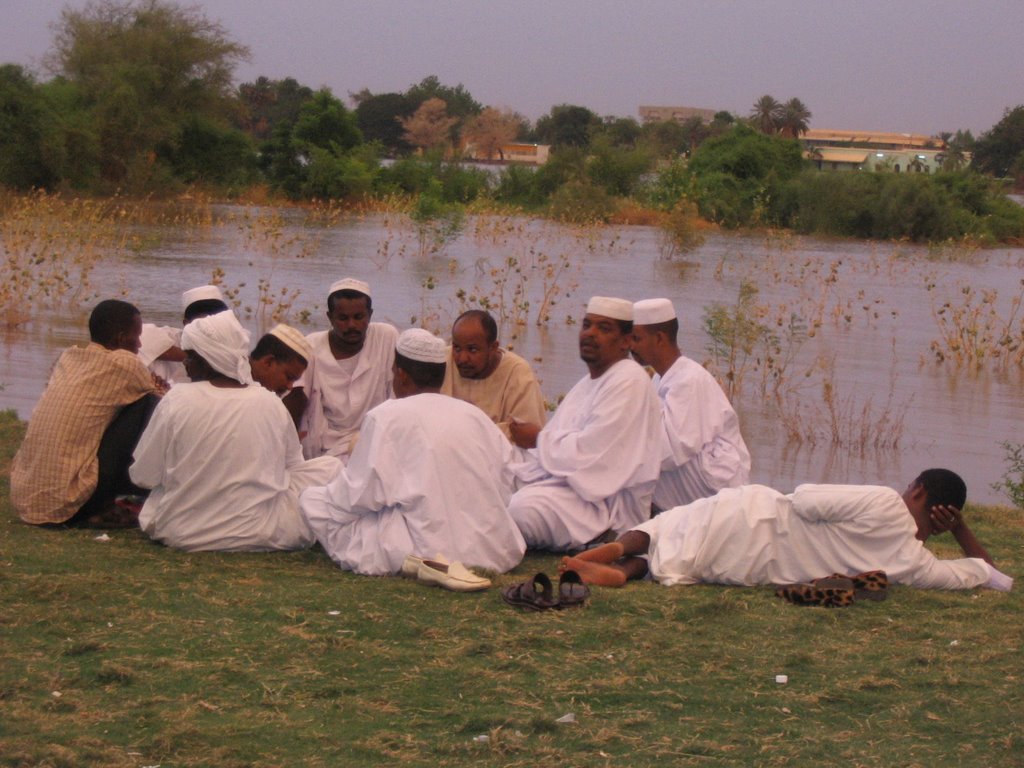
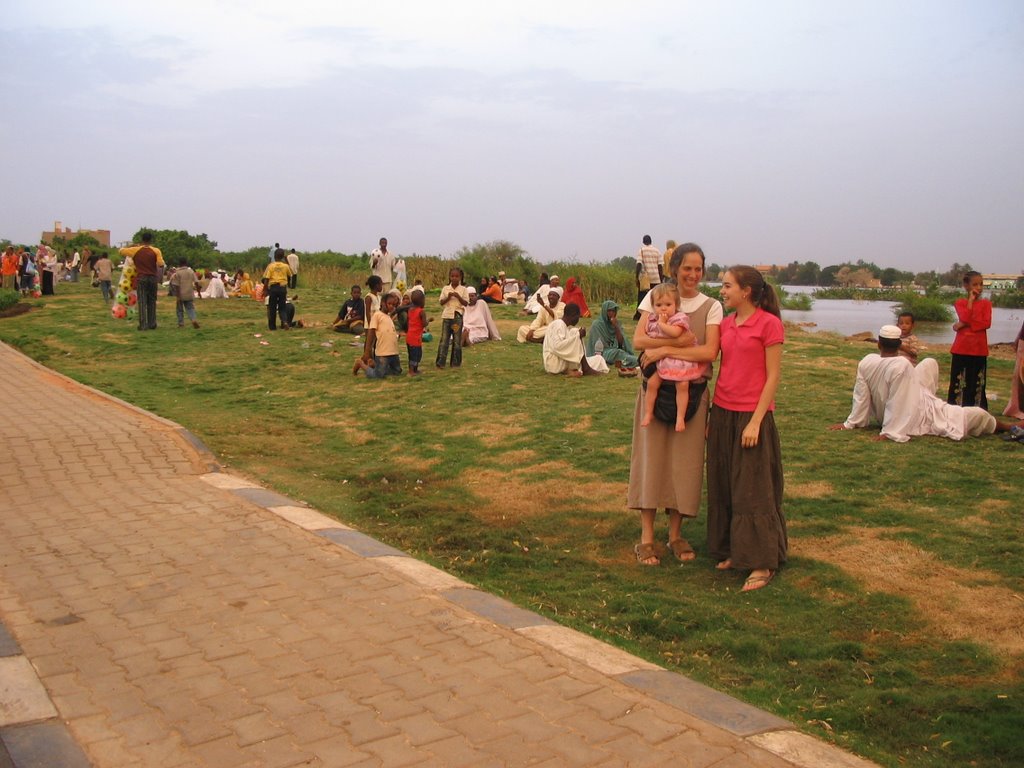
There are not really public parks in Khartoum. There are a few playgrounds around that you can pay an admission to enter and there are some restaurants where the real attraction is not the food but the pleasant garden you sit in to drink your coffee or soda. Most well-to-do Sudanese join clubs that have lawns and trees as well as restaurants and pools, and they go there on the lazy afternoon. But there is not really an open, public area where you can go just to enjoy a beautiful day.
Except for the Nile. There are sidewalks and even some lawn along the Nile, and there always seems to be a wonderfully cool breeze blowing off the river. It is a favorite spot for picnicking on weekends.
Sunday, September 03, 2006
Do a good turn daily
The electricity went out, and our generator was out of diesel. So I loaded Isaac and Nora into the stroller and headed to the gas station. I had no idea how to say what I wanted in Arabic, but the secretary working at the desk there found me the owner, a dapper man in khaki pants and light-colored shoes (quite a contrast to the oil-splattered workers). His English, with a slight British accent, was excellent, but he had bad news for me. Usually they sell diesel for generators in huge, chest-high barrels. Not something to tote around on a stroller! He sent a worker to the back room, though, who soon emerged with two empty plastic oil jugs which he filled with diesel for me. After I evaded many unwelcome offers to carry the jugs for me, I managed to get Eleanor back in the stroller and one of the jugs propped up carefully in Isaac’s seat. The other jug had a hole in the lid, so I carried it with one hand, pushed the stroller with the other hand, and at the same time kept an eye on Isaac, who was holding onto the stroller and walking since the diesel jug was in his seat.
At home, I left Nora in the housekeeper’s care (Isaac refused to leave the stroller—he was still hoping we’d make it to play group), and I went to work on the generator. The housekeeper was aghast that I was starting the generator. “The guard is supposed to do it,” she told me. But the guard for our building is about 75 years old, comes up to my shoulder, and is so thin and frail that I worry a haboob will blow him away. When they first brought us the generator, he tried once to pull the cord and nearly fell over backwards.
So it was just me and the generator. I kept pulling the starter cord to no effect. I heard a laugh and looked up to see a young guy—late teens or early twenties—leaning on his elbows on our garden wall. He was watching me and laughing. We’re next door to an African Mission in Sudan house. Every day truckloads of people come to the house, presumably in transit to their Sudan assignment. Usually they are older, in their thirties or forties, but this morning a particularly young truckload had arrived. I was indignant. I figured he wouldn’t understand my English, but I said, “Would you like to come start it for me?”
An older man (maybe his commander?) leaning with his back against our garden wall apparently did understand me, because he barked something and the young guy, a sheepish look on his face, came through the garden gate and walked over to the generator. He pulled the starter cord once and the generator leapt to life.
At home, I left Nora in the housekeeper’s care (Isaac refused to leave the stroller—he was still hoping we’d make it to play group), and I went to work on the generator. The housekeeper was aghast that I was starting the generator. “The guard is supposed to do it,” she told me. But the guard for our building is about 75 years old, comes up to my shoulder, and is so thin and frail that I worry a haboob will blow him away. When they first brought us the generator, he tried once to pull the cord and nearly fell over backwards.
So it was just me and the generator. I kept pulling the starter cord to no effect. I heard a laugh and looked up to see a young guy—late teens or early twenties—leaning on his elbows on our garden wall. He was watching me and laughing. We’re next door to an African Mission in Sudan house. Every day truckloads of people come to the house, presumably in transit to their Sudan assignment. Usually they are older, in their thirties or forties, but this morning a particularly young truckload had arrived. I was indignant. I figured he wouldn’t understand my English, but I said, “Would you like to come start it for me?”
An older man (maybe his commander?) leaning with his back against our garden wall apparently did understand me, because he barked something and the young guy, a sheepish look on his face, came through the garden gate and walked over to the generator. He pulled the starter cord once and the generator leapt to life.
Saturday, September 02, 2006
Toto, we're not in Kansas
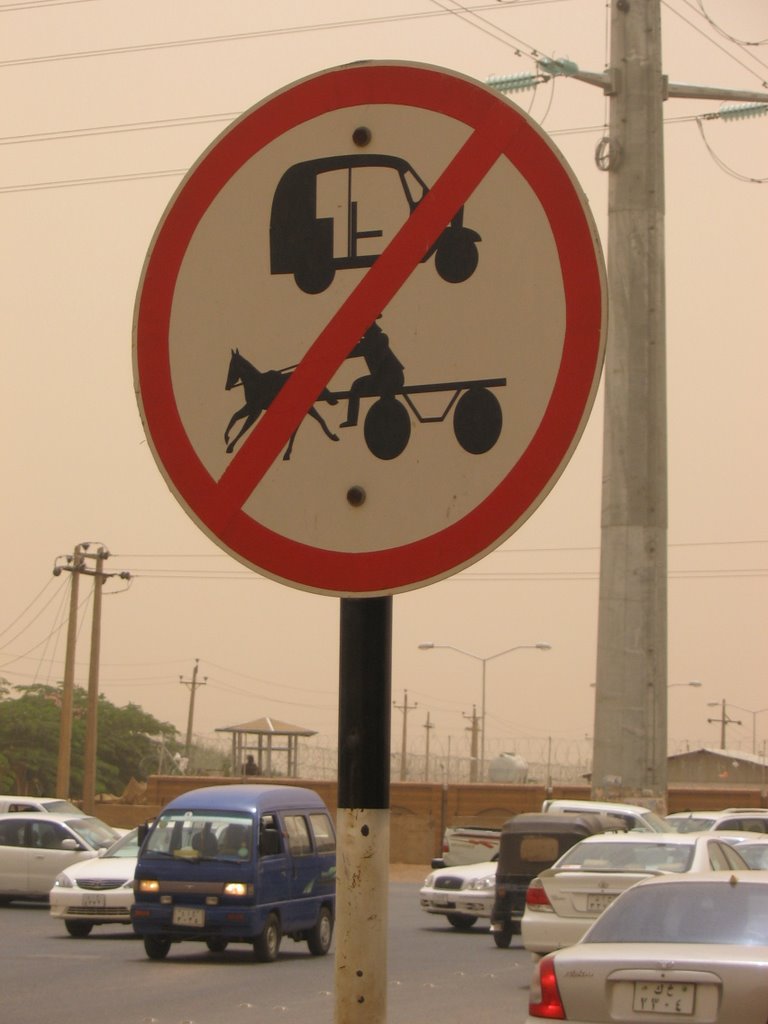 Rickshaws and donkey carts aren't allowed on this major road. We love the sign.
Subscribe to:
Posts (Atom)